by Vindi
A lean design system that boosted CSAT from 63% to 77%
Vindi is a Brazilian fintech specialized in recurring payments and subscription management. Founded in 2013, the company offers a SaaS platform that helps businesses manage billing, invoices, and collections — especially for subscription-based models. In 2020, Vindi was acquired by Locaweb Group, joining forces with Yapay, another company in the group focused on payment solutions. The merger expanded Vindi’s product portfolio and brought the challenge of unifying two platforms, teams, and visual identities into a cohesive user experience. Vindi faced challenges in implementing its design system due to technical debt and the fact that design, engineering, and product teams struggled to adopt and consume it effectively.

Problem
Vindi already had a design system in place, but it was rarely adopted by the teams. The system had been launched, with little stakeholder involvement or testing. As a result, it became too complex and technical, with dense documentation and too many options, making it hard for product designers to use. Additionally, the company had recently undergone a rebranding, which required a new visual language for the components to reflect the brand’s new positioning.
Solution
With a new team of 3 product designers and 5 developers, we applied the Pareto Principle to prioritize the 20% of components and screens that would deliver 80% of the impact. By mapping the most-used flows and the key components they relied on, we reduced complexity and worked in lean cycles, fewer deliverables per iteration allowed us to test early and often with stakeholders like developers and designers. This approach was especially important after Vindi’s merger with Yapay, which significantly increased the number of screens to be updated. Our plan: • Update design tokens to reflect the new brand identity • Rebuild the most critical components • Apply a visual facelift to the highest-impact screens I was responsible for adapting the previous color palette to align with the new brand identity. Simplification was a guiding principle across the entire design system work. The existing palette had over 90 tokens, inherited from Vindi’s former branding, but lacked clear usage guidelines. The naming conventions were inconsistent, combining semantic labels with raw color values, which made the system hard to scale and adopt. Here’s how I approached rebuilding the palette from the ground up Compnents Core components, such as tables, charts, inputs, and the sidebar were prioritized using the Pareto Principle, focusing on the elements with the greatest usage and impact. We followed iterative cycles with designers and engineers to validate behavior, usability, and edge cases. Documentation followed the same approach as the color palette: keeping it clear, practical, and easy to apply.


In practice


Application


Impact
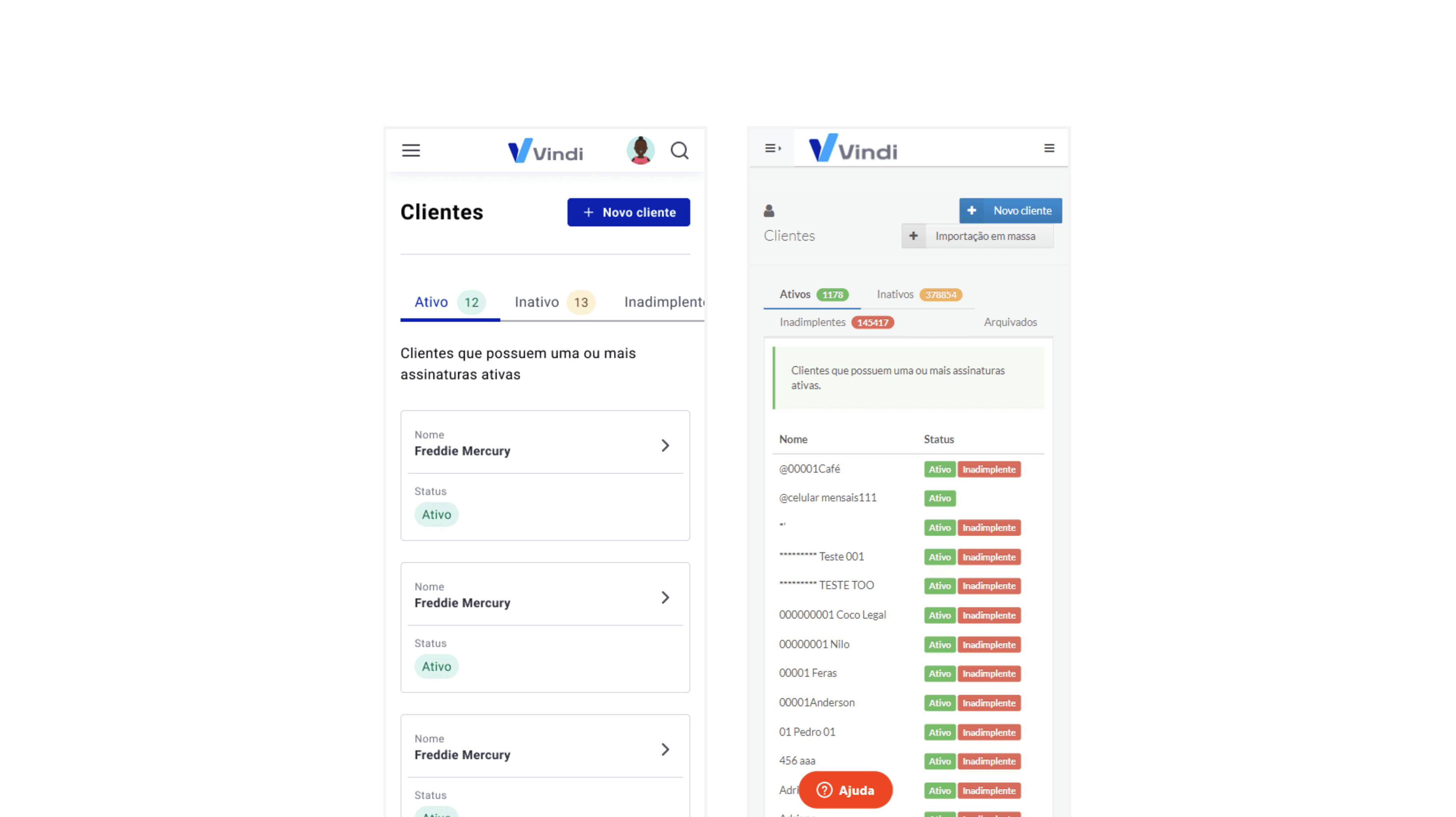
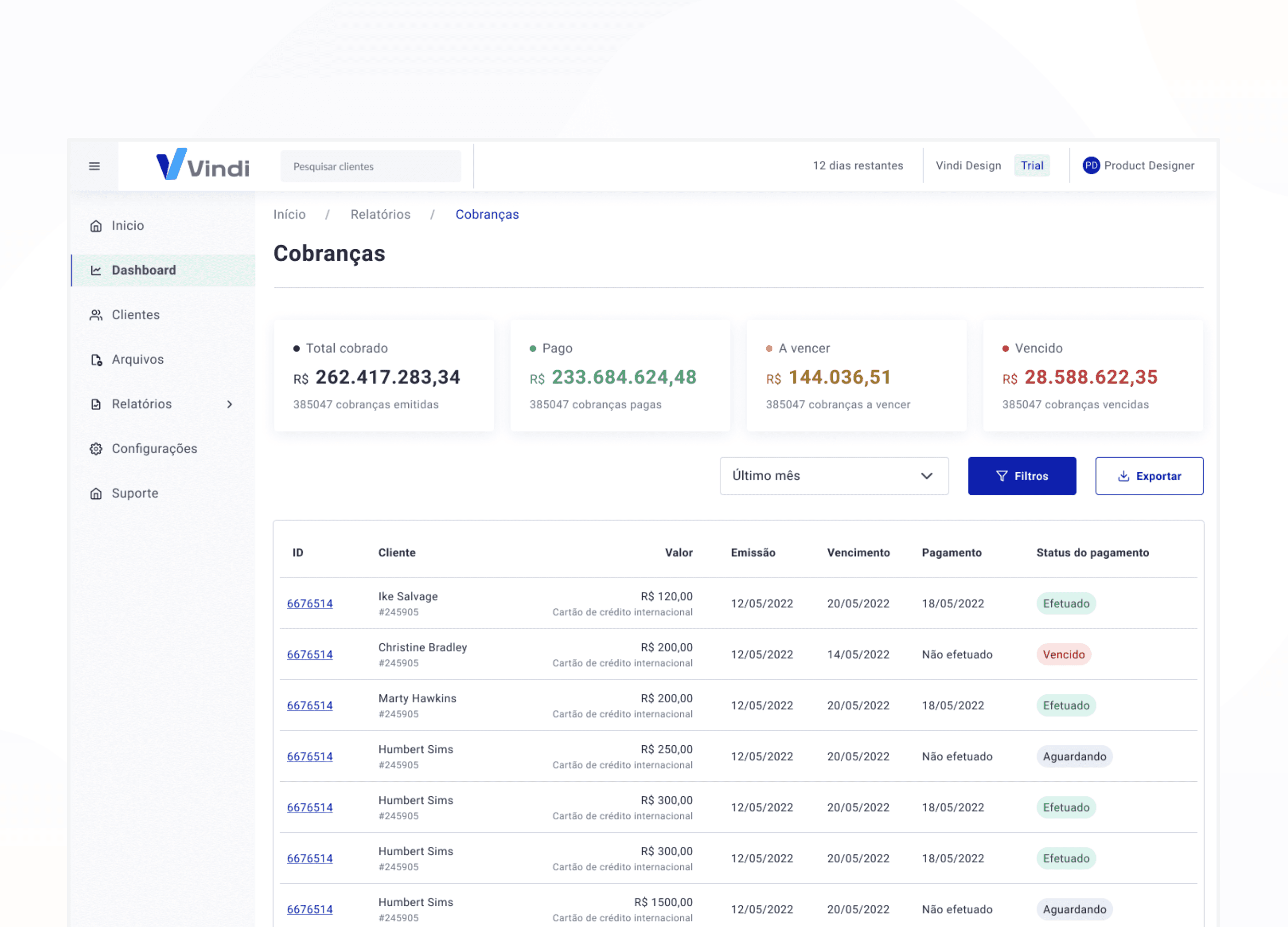
We shipped around 15 redesigned screens and observed a noticeable increase in user satisfaction, measured through our recurring CSAT survey. A total of 1,166 users responded, and the platform reached a CSAT score of 77%. Prior to implementing the design system, the score was 63%. This represents a 22% increase in user satisfaction following the visual update and system improvements. We also received positive feedback from product designers, highlighting improved consistency and easier adoption thanks to our lean approach.
Variations




Want to go deeper?
The full case study covers the research process, key metrics, and the decisions behind the design.
