by Medway
Rebuilding spaced repetition into a native study tool that competes with Anki
Medway's flashcards system was losing ground to Anki — students were leaving the platform mid-study to revise externally. As lead designer, I led the discovery and product definition for a full rebuild: a native SRS engine combining curated medical content, student autonomy, and AI-assisted creation, designed to keep 100% of the spaced repetition routine inside Medway.

Problem
Adoption dropped from 20.7% (2025) to 16.0% (2026) a near 5-point YoY decline. A discovery combining 87 Zendesk tickets, 5 in-depth usability sessions, and architectural review with tech leads exposed four compounding failures: Instability (26% of tickets): save errors broke the SRS cycle; Radiology images failed to load, blocking diagnostic study. Invisibility (23%): the feature was buried in menus and disconnected from "A Minha Semana" and video lessons. Trial users couldn't find it and didn't convert. No personalization (22%): a one-way street where doctors created and students consumed. No deck creation, no editing, no suspending mastered cards. Students fled to Anki. Opaque algorithm (17%): invisible review rules eroded trust in the platform's intelligence. The legacy code base couldn't scale: tags required exact matches, content was tied to residency level instead of course, and the architecture treated all cards as global/public — making private student decks technically impossible.
Solution
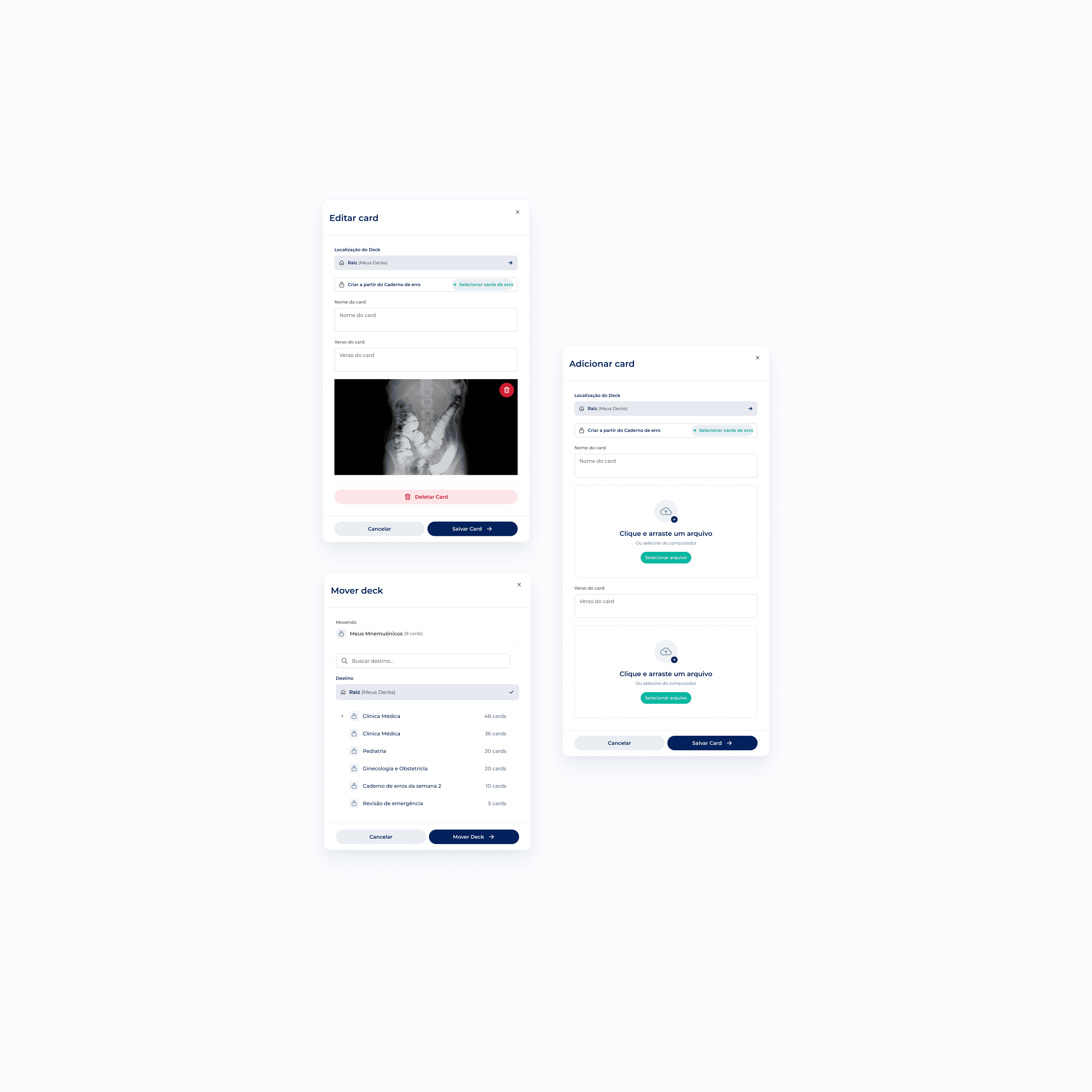
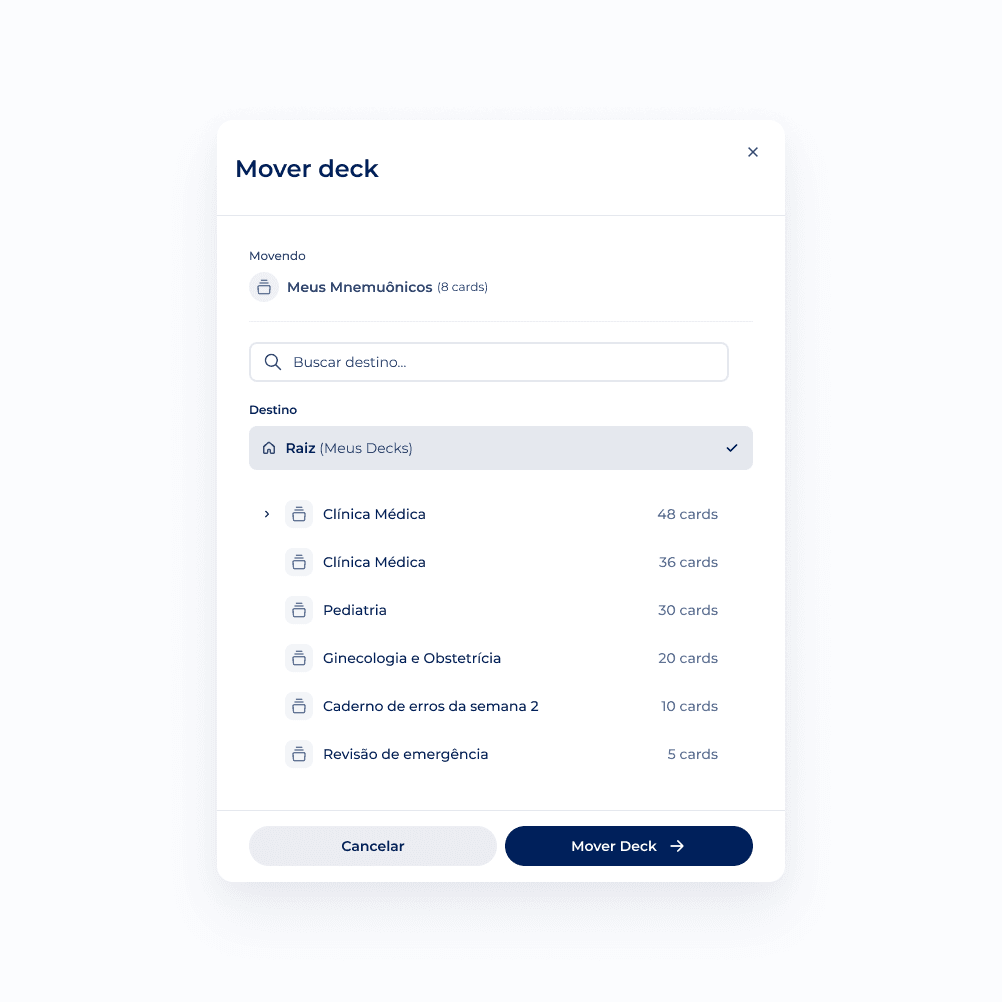
Rather than refactoring legacy code, I aligned with engineering on a full rebuild — same effort, far better ceiling. The new product is structured around three pillars validated in usability testing: - Transparent SRS engine. Feedback buttons show review intervals upfront (Errei: <1m, Difícil: 2d, Bom: 4d, Fácil: 7d). The "Errei" button immediately re-queues the card — fixing the most cited algorithm complaint. - Three-level taxonomy (Folders → Decks → Cards). Validated as the most intuitive mental model in 5/5 sessions (SEQ 7.0/7). Students can create private decks, edit official Medway cards into private copies, suspend mastered content, and import .apkg files from Anki. - Native integration over isolation. Flashcards now live where studying happens: a "Revisar Flashcards desta Aula" button after video lessons, suggestions tied to the "Caderno de Erros" (the killer feature — unanimous Aha! moment in research), and a pre-exam mode that prioritizes high-error topics 15 days before the test. The rebuild also introduces dual-state architecture (public Medway content + private student instances), MedBrain AI suggestions for card backs, and offline-first sync to handle the reality of studying between hospital shifts.


In practice


Application


Impact
+40% Weekly Active Users on the Flashcards feature −70% bug tickets (target: <0.5% of sessions with persistence errors) <2 min average time to first card during onboarding CSAT > 4.8/5.0 on the feature <300ms (P95) card-to-card transition latency 100% feature parity across Web, iOS, and Android The strategic bet: by closing the gap with Anki on autonomy and exceeding it on integration (Caderno de Erros, post-class shortcuts, AI assistance, native curation), Medway becomes the only place a med student needs for spaced repetition — turning a leaky retention point into a defensive moat.
Variations


Want to go deeper?
The full case study covers the research process, key metrics, and the decisions behind the design.
